
What Maureen's Isn't

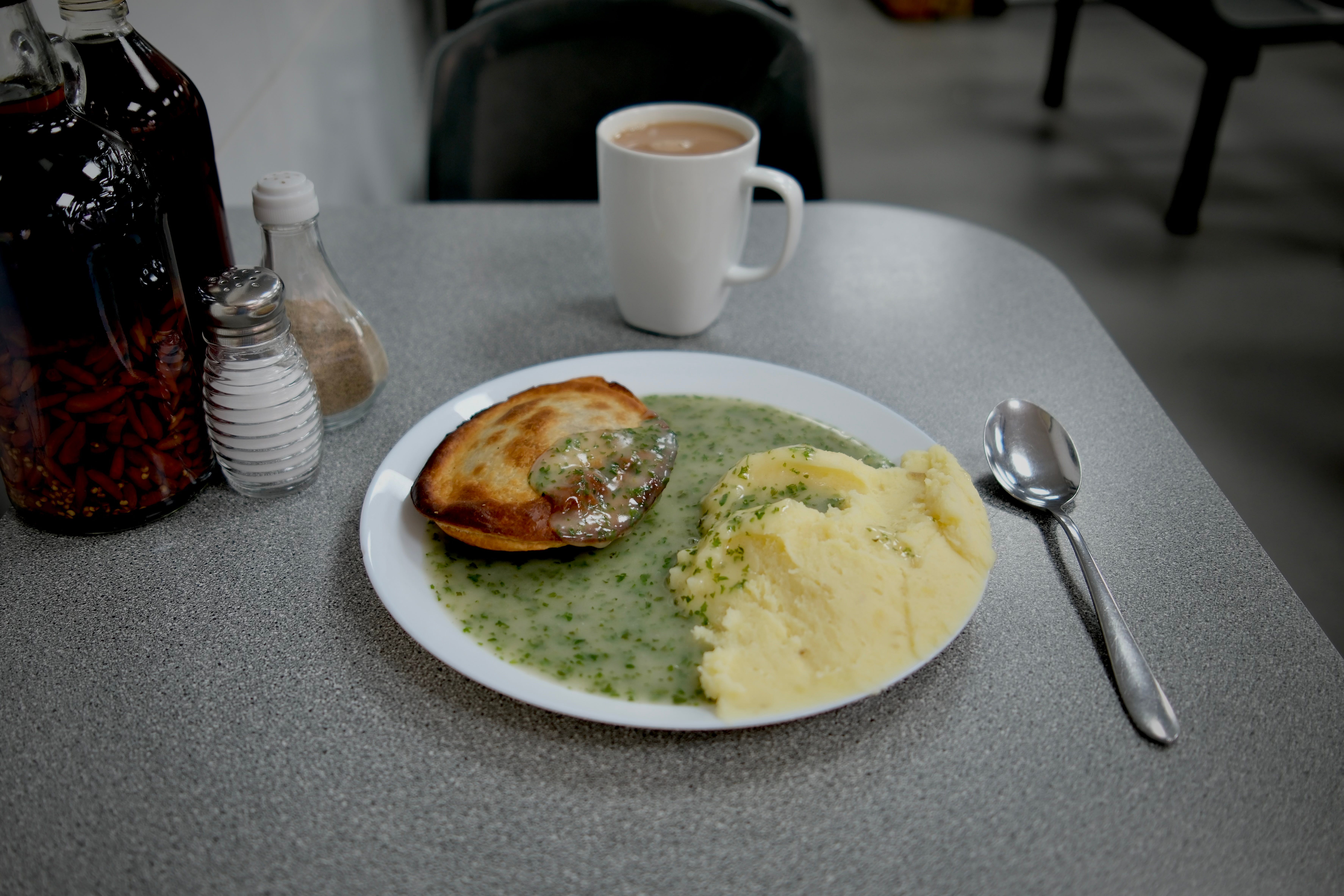
“Pie & Mash” has both fuelled and delighted working class Londoners for centuries. The pie is made with minced beef in gravy, with a simple crust and it’s served with mashed potato. The original ‘likker’ with which the pies were served, a white gravy packed with parsley, would have been made with the liquid used to cook eels. It would be hard to find something cheaper to produce, or easier to serve and eat. It’s filling, hot and even when made at cynical commercial volumes, hard to really dislike.
Most of the surviving businesses are of the original format ‘Eels, pie and mash’. These were purpose built, Victorian, tiled emporia with many of the design detail of the grandest pubs, but also, in layout and function, much more akin to the classic US diner.
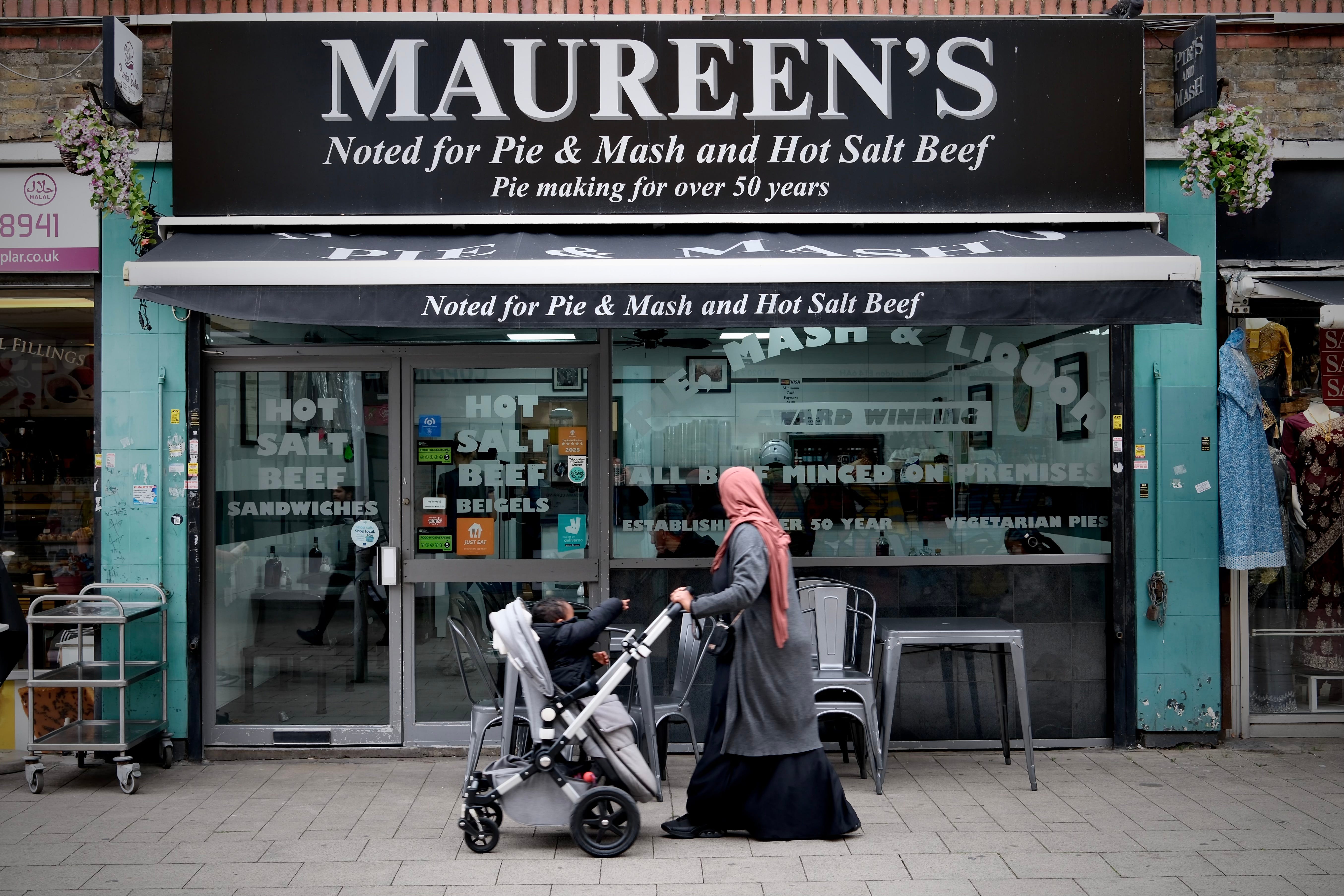
But Maureen’s doesn’t quite fit that pattern. It’s in the shopping ‘precinct’ of Chrisp St, a large concentration of social housing, built post-war over streets either flattened by bombing or levelled by ‘slum clearance’. The café, like the pubs, the shops and the library and even a clocktower were built into the development as social amenities.
It’s a shopfront. I’m trying to find even a single adjective to take that forward and failing. Chrisp St was designed by Frederick Gibberd and re-built in 1951 as part of the Festival of Britain, it is resolutely and completely unremarkable, perhaps as you could expect from something designed on careful budgets, for total functionality, at a time when we were quietly good at such things.
Given the committed socialism behind the design it’s impossible not to love it, but the same spirit means that ‘design’ is invisible. The designer’s work is not intended to show, just to function beautifully. It defies the definition of any aesthetic.
There’s a name on the front but nothing you could call ‘branding’. No ‘retro’ or ‘vintage’ cues. No concession to heritage. Just the most direct, computer-screen typeface, blown up big to fit the space. It’s like a stall holder shouting his wares, not advertising but announcing, as loud as is decent.
There are two small black and white pictures on the wall that might hint at an older family connection to catering, but that is as far as historical reference goes. London’s East End culture is famously forged of Victorian or wartime nostalgia but Maureens doesn’t seem fussed with any of that old toot.
The business is 61 years old and was set up to serve its community as the old style pie and mash shops would have done. The floor is a clean, grey resin ’system’ you’d see in a hospital or factory. The walls are tiled, but with contemporary 300mm square ceramics. Like the clean back room of a modern butchers. The chairs/tables are disconcertingly welded together as single units. Comfortable, easy to clean. The light comes from squares of LED in the modern suspended ceiling. A single orange juice dispenser, towering over the counter is the main splash colour, hi-vis in a functional monochrome palate.
The food is superb. The crust is thin and crisp. They take in large deliveries of beef every day, grind their own mince and cook the filling from scratch. The pies are cooked daily in big commercial ovens but they’re ‘hot-held’, in glass-fronted tanks before serving. It’s this step that reinforces the unique flavour and texture of the pie. Spot-on in flavour, and seasoning.
The mash is not laden with butter, but clean and tasting of purely of potato. There are no lumps. The likker is a smooth, chef-level Bechamel based on a great stock. There’s no eel involved these days, and it’s almost fully green with great handfuls of chopped parsley… not the curly stuff they’d have used back in the day but the flat-leaf stuff.
This is not a reflection of Mediterranean culinary aspiration, but the sort of parsley you get in big bunches, in a market, in a multi-cultural area in a big modern city. Historically we’d have used the native, curly variety but today, curly parsley is harder to find, a middle-class affectation, used with nostalgic irony.
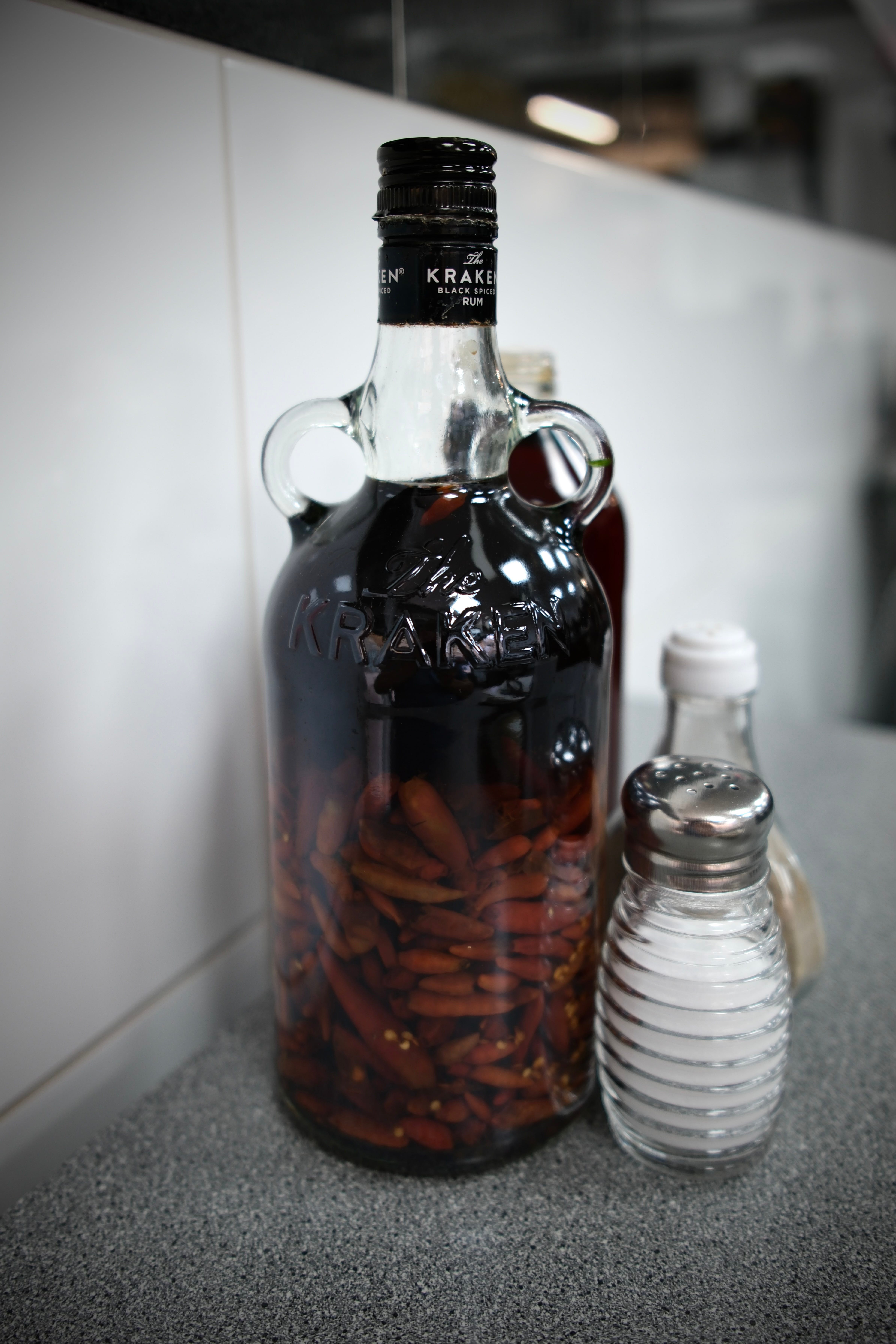
What’s really noticeable at Maureens is that there’s no pointless fixation on tradition. Yes, the mash is still scraped onto your plate with another plate. Granted, you are only permitted a spoon, never a knife and fork, but otherwise, modern techniques and ingredients have been used where contemporary tastes require it and the result is humblingly brilliant. In a re-purposed bottle that once held spiced rum, there’s malt vinegar, but it’s packed with macerating Kashmiri chillies.
They also serve an astonishingly good salt beef beigel, an unrelated East End culinary tradition, that seems just as popular with the crowd of locals. There are two huge guys from a local boxing gym discussing West Ham, an East Asian man, from his hat, a tech bro from a local startup, who orders three pies in succession. A bloke in hi-vis walks in and reels off 13 detailed individual orders that are assembled in seconds, packed in flat boxes and driven back to the site where they’re throwing up another unnecessary office block.
I’m sitting in one corner while two Korean food tourists have just walked in with a local guide. The crowd isn’t anything as intentional as ‘diverse’, it’s just an assembly of people drawn by a good meal. Nothing, no part of the food, the place or the people is knowing or ironic. To describe it as ‘authentic’ is to be disrespectfully arch.
What’s really remarkable is how the food follows the ethos behind the environment. Intense functionality, honourable diligence in design, construction and materials. Proud, ego-less cooking amidst proud, ego-less design.
What do we even call it when something goes from pre-ironic to post-ironic with nothing in between? I don’t know. I don’t have the words yet. But until then “Maureen’s Pie & Mash” will have to do
So evocative and lip smacking to read. I want to go to Maureen’s now.
Great article, I'm glad to learn about this place.
One nit: that's definitely not a sans-serif typeface.